

Mental health apps for young people: using digital solutions in South Sudan
This research explores the potential of using digital tools to support the mental health of young people in low-resource countries, with a focus on South Sudan, a region recovering from conflict.
Department of Computer and Information Sciences

Credits
Supervisors
Dr Lisa McCann and Professor Marilyn Lennon
Funded by
The University of Strathclyde SEA Scholarship


Mental health challenges
Globally, around 14% of young people experience mental health challenges. This study addresses the growing concern of mental health challenges among adolescents in low-resource countries, worsened by the COVID-19 pandemic and humanitarian crises.
Interviews with professionals
The Ministry of Health in South Sudan approved the research, which involved interviews with 18 professionals in government and non-governmental organisations.


Using digital solutions
These professionals included mental health experts, data specialists, and child support workers. They shared their thoughts on using digital solutions for young people’s mental health.
About South Sudan
Listen to Carolina Wani tell us about South Sudan and its capital Juba.

Swipe left and right to view more images


Lack of mental health professionals
South Sudan has just nine psychologists and three psychiatrists in-country with over 20 NGOs working on psychosocial interventions.
Médecins Sans Frontières
Between January and July 2022, Médecins Sans Frontières conducted more than 11,500 individual and group mental health consultations in seven projects in different parts of the country.

Interview locations
To maintain confidentiality, interviews were arranged in various secure locations, including offices and hotel grounds. One interview took place on top of a prefabricated building which required climbing several flights of stairs to reach the interview site.
Swipe left and right to view more images

The participants
18 professionals agreed to participate in the interviews, representing a diverse range of organisations including the World Health Organization, War Child, the Ministry of Health, the Ministry of Education and the South Sudan Red Cross.
Specialists from various fields
These professionals included mental health experts, data specialists, and child support workers.

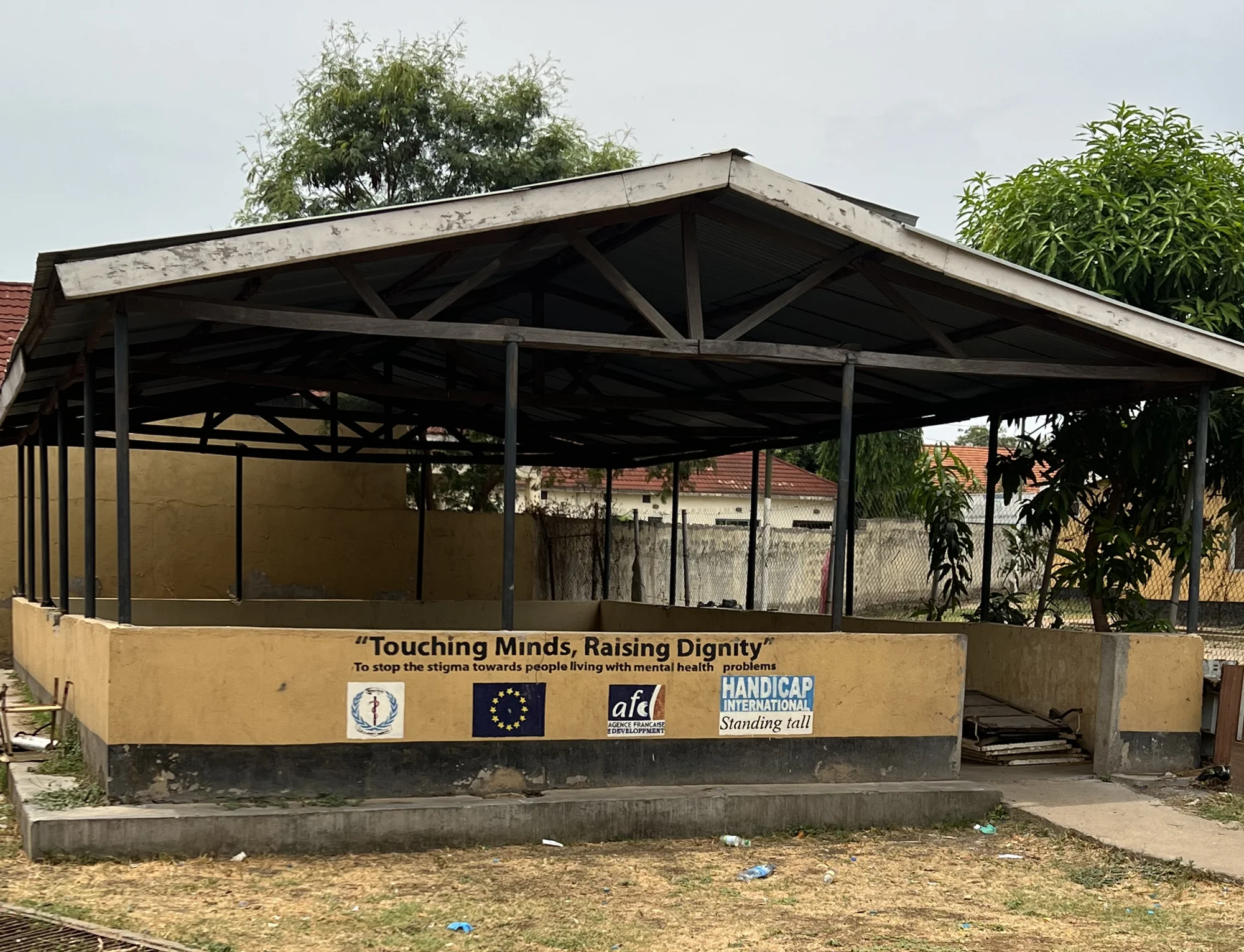
Severely lacking
We found that mental health services are severely lacking in South Sudan. Carolina shows us that it’s not easy to find the mental health ward.
Stigmatised
There are cultural and awareness issues: mental health is a stigmatised and taboo topic.


Language barrier
Language a significant barrier – South Sudan is a multilingual country, with over 60 indigenous languages spoken.
Other challenges
Our research also highlighted challenges such as limited device access, poor network coverage, lack of education and digital skills, and limited funding.

Swipe left and right to view more images

How we could improve mental health support
Our study found that digital tools could improve mental health support for young people in South Sudan. Mobile technology was a crucial part of this, reaching even remote communities.
Digital transformation
Our research revealed that South Sudan is experiencing digital transformation in various sectors, including health, education and telecommunications, with the council demonstrating digital capabilities this year.


Data protection and privacy
Our study also stressed the importance of data protection and privacy regulations to ensure the responsible use of technology in mental healthcare, especially as the country develops its first mental health strategy in 2023.
War means need for mental health support
This case study is incredibly significant because as we see more wars and humanitarian crises around the world, more young people will need mental health and psychosocial support.


Bridging the gap
Using digital mental health interventions is one way to bridge this gap, and the lessons learned from South Sudan’s unique post-conflict situation can help other regions facing similar issues.