
Sustainable impact by design
The STEM Equals Summer Scheme won funding to mark COP26, and so ten Strathclyde staff members were able to work with diverse young people in Ayr and Girvan over five days of STEM (Science, Technology, Engineering and Mathematics) activities, talking about their research and how it can limit climate change.
We had a lot of fun!


Part 1: Lithosphere
Today, the construction sector represents one of the main contributors to the carbon global emissions. Conserving existing buildings represents a more sustainable future.

Swipe left and right to view more images

How sustainable is stone?
We looked at pictures of monuments, and matched the samples of stones under the microscope with the building based on their colour.
How does the weathering process work?
We took some pieces of stone used to build Bern Cathedral and dropped them into sample tubes. We then moved outside, and we could see the effects of erosion in person.

Solar cells
Aruna’s work looks at how we can make better solar panels, which will let us make electricity without burning fuel. She showed us how to use juice from berries to make solar cells and, to our surprise, they worked!
Swipe left and right to view more images

Managing electricity
Hong showed us how to make circuits that would control the electricity made in different ways, so that we always have electricity when we want it.
Listen to a story
Princess Lithosphere’s West Tower
One of four stories narrated by storyteller Allison Galbraith and illustrated by Gaston Welisch

Part 2: Atmosphere
If we pollute the air, animals and plants will die, so this isn’t sustainable. Rui and Agusti showed us how air currents can be used to make electricity. Rockets, like the ones we made with Christie but much bigger, can be used to investigate the atmosphere high above the Earth.

Swipe left and right to view more images

Which bottle rocket will fly best?
We made bottle rockets using water, vitamin C and Seltzer tablets. We tried mixing them in different amounts and placing them differently so they would fly well.
Not rivalling NASA just yet
None of them went into space but a few of them jumped!

Making electricity without air pollution
We introduced how the offshore wind power is generated, transmitted, and supplied to households to light bulbs. We emphasized what we can do to tackle climate change to encourage children to engage in renewable technology.

Swipe left and right to view more images

Engaging in renewable technology
We helped students understand why we need modern technology to control the wind power.
Listen to a story
King Atmosphere’s North Tower
One of four stories narrated by storyteller Allison Galbraith and illustrated by Gaston Welisch

Part 3: Hydrosphere
Hydrosphere means all the water on, and in, the Earth. This includes seas and rivers, and water in air like clouds and rain.

Swipe left and right to view more images

Water turbines
We made water turbines, which can be used to create electricity with the power of water.
Fermentation and biogas
Bacteria and yeast are useful as they break down food (in our gut) or waste material (in our sewage) and make methane gas. The gas can be burnt, so the bugs are helping us to get energy, or making farts!

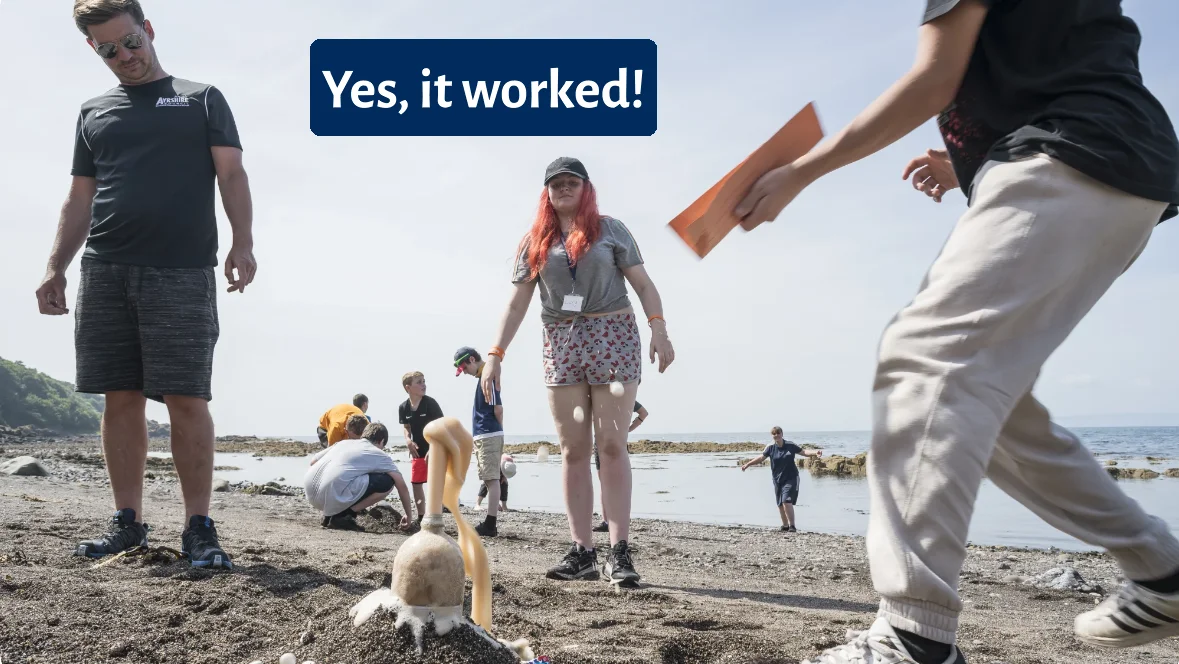
Cola volcanoes
The cola experiment showed us how gas can be pushed out of liquid very quickly.
Did it work?
Swipe left and right to view more images



Giving out carbon dioxide
This is what happens in volcanoes and also happens in the sea as it warms up.
Listen to a story
Prince Hydrosphere’s East Tower
One of four stories narrated by storyteller Allison Galbraith and illustrated by Gaston Welisch

Part 4: Biosphere
We went to Dumfries House and looked at different living things (moths, lichen plants) that are affected by pollution. If species are killed by human activity, the planet isn’t sustainable any more.

Swipe left and right to view more images

Bio-indicators: moths and lichen
Moths and lichen are bio-indicators, which means that they can show us the quality of the air around us. We determined that the air in Dumfries House was clean!
Digestion

Worms
Listen to Dr Margaret Cunningham explain how they experimented on different types of worms and the optimal environments for the blackworm which survives in water.

Swipe left and right to view more images

Painted stones
The learners tested their skills at rock painting with messages of sustainability. One of the highlights of the rock painting session was discussion on the theme each learner had chosen to paint on their own rock – for example, the sustainability of Harry Potter and his broom vs driving a car!
Listen to a story
Queen Biosphere’s South Tower
One of four stories narrated by storyteller Allison Galbraith and illustrated by Gaston Welisch

Conclusion
The student voted for the most sustainable character in the stories, and left a drawing or note for future students in a time capsule.
Swipe left and right to view more images


Sustainability award voting
Should Queen Biosphere should win the sustainability award because her tower produced flowers for the bees, as well as fruit to feed people at Culzean Castle, or should Thomas the servant win because he recycled rubbish, and re-used it to make useful things like a pen-knife?
And the winner is...
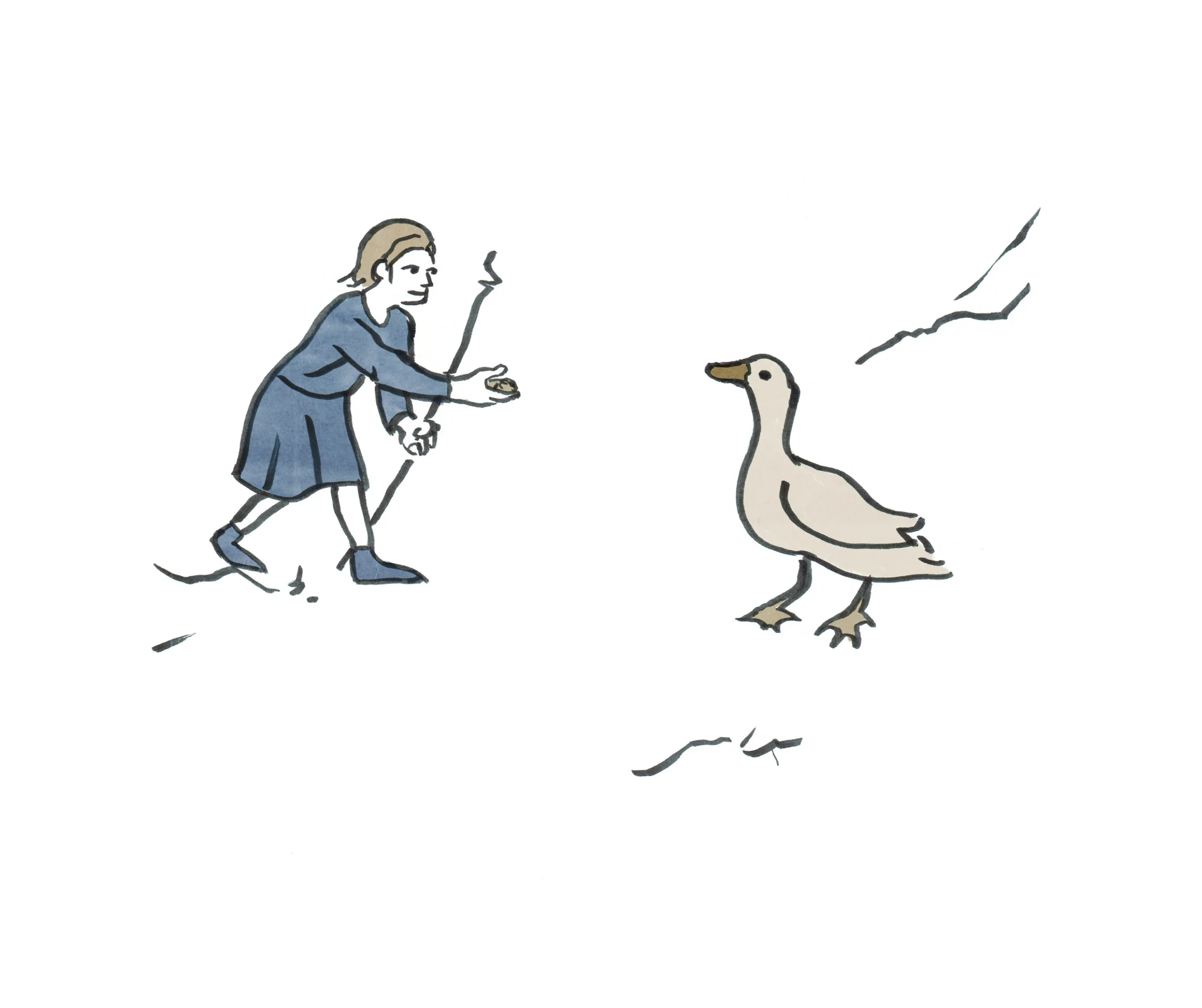
Thomas the servant was the winner. Thomas was given extra votes because he was an ordinary boy, and because he cared for the injured duck. His love for wildlife and his smart use of rubbish to protect the duck’s nest made Thomas the clear champion.